
'Kingdom of Heaven'/'Kingdom of God'/'Church' in the Gospels
Matthew Mark Luke John
Read Essay →2 Peter and Jude in Parallel
1:10 Ταῦτα γὰρ ποιοῦντες οὐ μὴ πταίσητέ ποτε.
Read Essay →A Cluster of Positions
1. (Un)conscious desire to avoid the demand made on a person’s life if these materials are
true
2. Anti-supernatural bias (note distinctions between atheistic, agnostic, deistic, neo-
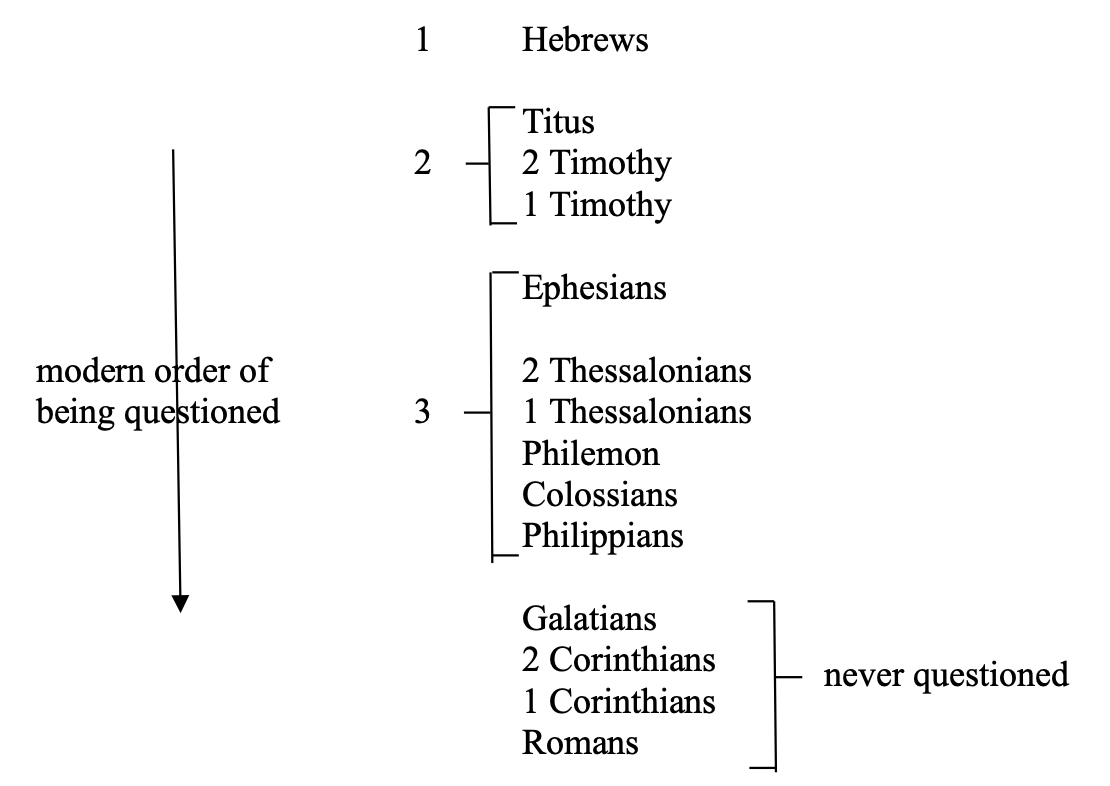
Read Essay →Accepting the Pauline Corpus
Animal Symbolism in Biblical Apocalyptic
Introduction
Read Essay →Canon Criticism
I. Definition of Canonicity
Read Essay →Characteristics and Peculiarities of 1 Peter
1. Only letter to speak of Christ’s descent to Hades (3:18-20; 4:6), although some see a parallel in Ephesians 4:9
Read Essay →Characteristics and Peculiarities of Acts
1. Along with Luke, Acts has short paragraphs that summarize periods of time the author
Read Essay →Characteristics and Peculiarities of Colossians
1. Has the greatest number who send salutations of any New Testament writing. Philemon has a goodly number as well. Romans has by far the greatest number of saluted people.
Read Essay →Characteristics and Peculiarities of Ephesians
1. distinctive expressions include
“in the heavenlies [ἐν τοῖς οὐρανοῖς]”: 1:3, 20; 2:6; 3:10; 6:12
Read Essay →Characteristics and Peculiarities of Hebrews
1. the only canonical New Testament epistle without any statement of authorship (John’s three epistles do not very clearly identify their author either.)
Read Essay →Characteristics and Peculiarities of Romans
1. With the exception of Luke 20:16, Romans is the book that most uses the Pauline expression God forbid (μὴ γένοιτο, mē genoito): 3:4, 6, 31; 6:2, 15; 7:7, 13; 9:14; 11:1, 11. It appears also in 1 Corinthians 6:15; Galatians 2:17; 3:21; cp. 6:14.*
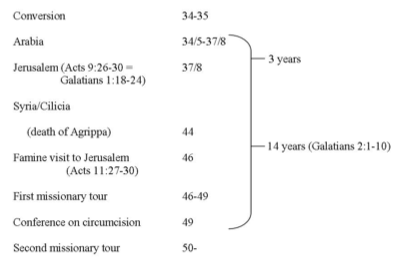
Read Essay →Chronology of the Life of Paul
Colossians, Philemon, and Ephesians Sent Simultaneously (Plus the Letter to the Laodiceans?)Chart
1. All come from an imprisonment: Ephesians 3:1; 4:1; Colossians 4:3, 18; Philemon 1, 9-10
Read Essay →Critical Introduction to 1 John
I. Authorship
A. External
1. Earliest allusion in Polycarp (Ad Phil. 7)
Read Essay →Critical Introduction to 1 Peter
I. Destination Geographical
Read Essay →Critical Introduction to 2 John
I. Authorship
A. External
The external attestation to 2 John is not so strong as that for 1 John. Absence of citations from the book may have been due to its subject matter. It is significant that the objections to apostolic authorship come from the later Christian writers.
Read Essay →Critical Introduction to 2 Peter
No epistle of the New Testament (Thiessen) “has earlier or stronger attestation than 1 Peter,” while (Moorehead) “the Second Epistle of Peter comes to us with less historical support of its genuineness than any other book of the New Testament.”
Read Essay →Critical Introduction to 3 John
I. Authorship
It is uncertain whether there is any evidence for 3 John ‘s being cited before the third century, if the Muratorian Canon speaks only of two epistles of John. This lack of citation and mention is understandable because of its brevity and the character of its contents. What was said of “the Elder” in connection with 1 John applies here also.
Read Essay →Critical Introduction to James
I. External Citation and Authorship Evidence (see Salmon, pp. 473ff.)
Read Essay →Critical Introduction to Jude
The three main issues in Jude are (1) its canonicity, (2) its relationship to 2 Peter, and (3) its use of extra-canonical literature.
Read Essay →Dates and Origin of New Testament Writings by Four Scholars ComparedChart
Book Guthrie Harrison Thiessen Hiebert
Read Essay →Destination and Date of Galatians
The main introductory problems associated with Galatians are its destination and date. Determining the destination affects the time frame for the date. Since the readers are called “Galatians” (3:1; cp. 1:2), the question is whether Paul uses the term to mean (1) the ethnic group of Gauls, who gave their name to the ancient Hellenistic kingdom, or (2) the citizens of the Roman province of Galatia. The “northern Galatia” theory refers to the first option; the “southern Galatia” theory indicates the second. By that time the Roman province extended farther south to include Lystra, Derbe, and Iconium, cities Paul and Barnabas evangelized on the first missionary tour. Northern Galatia was a less extensive territory in the mountainous inland area around Pessinus and Ancyra.
Read Essay →External Testimony to the Authorship of Hebrews
I. Presentation of Evidence
Read Essay →Extra Names in the Headings of the Pauline Epistles
Introduction: Possible significances of added names in Paul’s salutations
Read Essay →Fragmenting Philippians
I. Mood shift between 3:1 and 3:2
Read Essay →General Schematic for Christian Apologetics
To locate the study of critical introduction to the Old Testament within the total picture of apologetics, we give here an abstract of the flow of apologetics. Instead of beginning with objective Christian evidences, as traditionally done, we include a prior step so that evangelism and apologetics become much the same kind of thing. Coming to conviction begins in the present with (1) our sense of need to be loved, to feel innocent and meaningful, and to have something to depend on. (2) The answer in Christianity comes as a cluster of historical events surrounding the person of Jesus the Messiah, especially his resurrection and the meaning of his life, death, and resurrection for human need in any age. (3) When we begin to carry out the principles of living that Christ taught and to receive in experience Christ’s love, the purposefulness of life, the freedom from guilt, and the confidence of living under One we can trust, we confirm subjectively that the truth is also the truth for us. Living in the new condition helps us identify more clearly the real needs among, and plus, perceived needs. This stage helps us understand the message itself more clearly, and so on. The process forms an ongoing dynamic of reciprocal causations between the three “poles.”
Read Essay →Gnosticism and the Book of Colossians
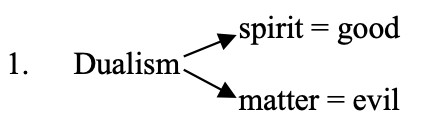
Evil/sin was defined as a kind of being/“stuff” rather than a way of acting.
Read Essay →Goodspeeds Arguments Against the Pauline Authorship of Ephesians
1. Ephesians reflects no definite, localized, historical situation which it is intended to meet.
Read Essay →Hebrews and the Alexandrian Origin or Destiny
1. The only reasons for associating Hebrews with Alexandria are that (1) the earliest favorable attestation comes from there and that (2) it supposedly uses the allegorical method of interpretation.
Read Essay →Hebrews Rhetorical Style
1. Hebrews uses the Old Testament text more than any other New Testament book does. (Matthew is next.) It has the longest Old Testament quotation of any book in the New Testament: 8:8-12 > Jeremiah 31:31-34.
Read Essay →Historical Background Behind GalatiansChart
Acts Secular Sources Galatians
Read Essay →Implications of the Unity of Biblical MaterialsOutline
I. Jeremiah as a test case
II. New Testament books where the unity issue has been raised
Read Essay →Internal Evidence for the Authorship of Johns Gospel
Determining from internal evidence the authorship of John’s gospel requires establishing the identity of “the disciple whom Jesus loved”: “This [disciple that Jesus loved] is the disciple that bears witness of these things and wrote them, and we know his testimony is true” (21:24 + 20). A similar comment appears in the account of the spear thrust: “He that has seen has borne witness, and his witness is true; and he knows he says true things that you may believe” (19:35; cp. 20:30-31). The characteristic description appears five times in the gospel beginning with the night before Christ’s death: 13:23; 19:26; 20:2; 21:7, and 21:20.1 Other more vague references to unnamed men include the second of “two disciples” of John that heard Jesus speak (1:35-39), the first being Andrew (1:40); and “another disciple,” known by the high priest (18:15).
Read Essay →Internal Evidence on Critical Matters: Hebrews
I. Authorship
Read Essay →Internal Evidence on the Authorship of Acts of Apostles
The “we passages” in Acts provide the best indication of its authorship. They occur in a series of sections as follows:
Read Essay →Interpretation in Hebrews Contrasted to the Allegorical Method of Philo
Historical backgrounds are important because they illuminate scripture. In addition, they often confirm the biblical record and occasionally may even help prove its trustworthiness in regard to things that can be tested. Consequently, we tend to view historical backgrounds favorably as a valuable resource. This presentation, however, stresses another observation. Like all sources of information, historical background, misused, can harm rather than help biblical studies. In the wrong hands, it can be invoked in ways that detract from hermeneutical and apologetic concerns.
Read Essay →Irregular Linguistic Features in Revelation
Read Essay →
Luke-Acts as Interpreted History
I. Selectivity
The fact that the book does not recount all the events means that selection has occurred. If selection has occurred, the writer does not just tell about a bunch of things that happened (“stream of consciousness”). Rather, he is a historian that makes a judgment about what events are epitomes and direction-setting events. Seeing the big picture, a historian chooses events that—from the vantage point of God above or of later perspective—prove to be more important because of their impact on subsequent events or prove more useful to any distinctive purpose the author may have.
Read Essay →Matters That Affect Style
Higher critics do not allow a wide enough range of style variance in New Testament authors. The items below have implication for greater variety in style.
Read Essay →Method in Literary Criticism
Scholars look at a number of phenomena in Pauline literature to assess whether Paul actually wrote the piece: (a) words (new words not in Paul, Pauline words not in this writing, Pauline words used in non-Pauline ways), (b) syntax (complex vs. simple sentence structure, Hebraisms and other solecisms), (c) topics addressed, and (d) mood of the writing.
Read Essay →New Testament Studies and the Use of Amanuenses
Introduction
The majority of New Testament writings are letters, so we expect them to reflect practices in first-century letter writing. One custom was using an amanuensis, a stenographer who wrote down the contents. Biblical studies do not give this factor much attention even though New Testament writers used amanuenses. The oversight seems unusual to us today since most of us in the Western world write our own correspondence. If we do employ a secretary, it is primarily for computer skills. We are accustomed to reproducing by typeset, copiers, or computer printers. But ancient writers had to use different methods. If the work of an amanuensis can impact New Testament studies, we should allow that to affect our thinking where appropriate.
Read Essay →Observations on Revelation
I. Literary Form
Read Essay →Origin of the Roman Church(es)
At least three household churches existed in Rome by the time Paul wrote to the
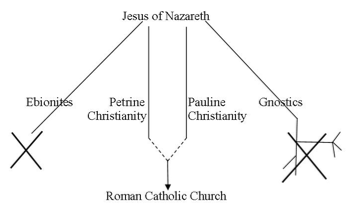
Read Essay →Orthodox Christianity
Pastorals: Date, Destination, Sequence, Purpose
Date: Fluctuates according to the dating of Paul’s first imprisonment in Rome; not
Read Essay →Paul's Connections With CorinthChart
Writing of 2 Corinthians (2 Cor. 1:1-2)
? painful 2 Corinthians 9:2; 8:10
Read Essay →Paul's Many Adversaries in Ephesus
Introduction
Read Essay →Pauls Visits to JerusalemChart
Events in Galatians Events in Acts
1:16-17 Paul is converted, goes to
Arabia, then back to
Damascus (3 years)
Read Essay →Peculiarities of Johns Gospel
1. Emphasizes the corporeality of the resurrected Christ as well as the fleshliness of Jesus
Read Essay →Peculiarities of Luke
1. Indicates most noticeably the prayer life of Jesus
2. More attention given to women involved in the life and ministry of Jesus, which could fit
Read Essay →Peculiarities of Mark
1. Most characterized by the expression εὐθύς (euthys, “immediately”: 42 times vs. 4 times in Matthew and once in Luke). Does καὶ εὐθύς [kai euthys] amount to “and by and by,” “and at another time”?
Read Essay →Peculiarities of Matthew
1. Among the gospels, greatest number of Old Testament citations of prophecies fulfilled in
the life of Jesus
Read Essay →
Peg Dates for New Testament Studies
A.D. 34 (perhaps 37) Accession of Aretas Paul’s conversion had to follow this date (Gal. 1:17-18; 2 Cor. 11:32).
36 Pontius Pilate deposed Does the absence of a procurator in Palestine account for the possibility of executing Stephen and of Paul’s putting others to death? (Acts 7:1-8:3; 9:1-2; 26:9-11)
Read Essay →Philippians: The Time of Writing Within the Roman Imprisonment
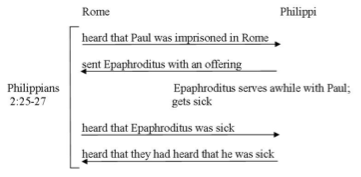
Place of Acts in the New TestamentNotes
Basic proposition: Place leads to purpose.
I. Traces the spread of the gospel from Jerusalem to Rome
Read Essay →Place of Writing the Prison Epistles
The criteria for the prison-epistles imprisonment are (1) a lengthy imprisonment with (2) an expected release (3) where Onesimus would have access to Paul.
Read Essay →Primary Questions in the Collection of the New Testament Canon
Some scholars suppose the apostles did not consider their work as something for the subsequent ages of the church. They were writing for the then and there. They had supposed that Christ would return within the lifetime of some first-generation Christians. Writing for posterity did not enter their minds. If their literary activity took place under these conditions, collecting their writings to establish a permanent canon would not have been a concerted effort either. Only when it became evident that Christ would not immediately return did the early Christians begin to locate and assemble apostolic writings.
Read Essay →Reasons for the 'Mood Shift' Between 2 Corinthians 9 and 10
1. Change of situation
Read Essay →Recensions of Romans
1. Placements of the doxology (16:25-27 in the standard English text)
a. At end
Read Essay →Reconstruction of the Fourfold Corinthian Correspondence Theory
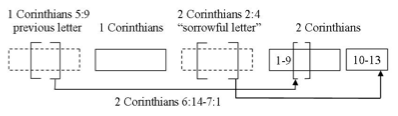
Romans: Origin, Date, and Destination
I. Origin
Paul wrote Romans after the acquaintances previously known from elsewhere had moved to the imperial city (16:3-16), after he had preached from Jerusalem to Illyricum (Romans 15:19, cp. 23), while he was in route to Jerusalem with the offering for the saints (Romans 15:25-28, 31), and at a time when he anticipated preaching the gospel in Spain (15:24, 28-29). According to Acts 19:21-22, while Paul was still in Ephesus on the third tour, he planned to go to Jerusalem and then to Rome. On this third tour, Paul organized the collection for the poor Christians in Jerusalem (cp. Acts 20:4; 21:15; 1 Corinthians 16:1-9; 2 Corinthians 8-9). Having left Ephesus after the riot, Paul journeyed north through Troas, across through Macedonia, and down to Greece (20:1-6) before returning through Macedonia and down the east coast of the Aegean Sea to Miletus and on to Palestine. He had not planned to minister again in Asia (Acts 20:25, 38). His three-month stay in Corinth during this trip would have given him time to compose Romans.
Read Essay →Sequence of the Thessalonian Correspondence
I. 2 Thessalonians follows 1 Thessalonians.
Read Essay →Sketch of Propositions and Presuppositions on the Use of 2 Samuel 7:14 in Hebrews 1:5b
I. While 2 Samuel 7:14 must refer to Solomon because Solomon so understood it (1 Kings 6:11-13; 8:17-21), it cannot refer exclusively to him since the context speaks of an eternal seed (2 Samuel 7:16).
Read Essay →Sources of the Pauline Material
Introductory Guidelines
Read Essay →The 'Previous Letter' to the Corinthians
List of Views
Read Essay →
The 'Speeches' in Acts
Besides historical narrative in The Acts, Luke includes significant verbal presentation from conversations, prayers, letters, and sermons. Below in order of appearance are the major examples of spoken material.
Read Essay →The Colossian Heresy
I. A combination of doctrines in one group, rather than two or three doctrines held by
Read Essay →The Determining Principles for Canonicity
In keeping with the structure of apologetics, the following sketch deals with the principles for determining whether a writing belongs in the Judaeo-Christian canon.
Read Essay →The Gospels in General
I. Form
A. Large portions cover the triumphal entry to the ascension: Matthew 21-28, Mark
11-16, Luke 19:29-24:53, John 12-21
Read Essay →The Origin of Gnosticism and Its Bearing on the Date of Colossians
We do know about a highly developed form of Gnosticism in the second century, but that fact has no bearing on the date and content of Colossians as a Pauline production in the first century.
Read Essay →The Problem of the Pastorals
I. Historical Problem
Those who reject the Pauline authorship
of the pastoral epistles (1 Timoty, 2
Timothy, Titus ) contend that there is no time in Paul’s life as recorded in
Acts when he could have written these epistles.
The Purpose of Acts
In working out the purpose of Acts, we consider three items:
Read Essay →The Relationship of the SynopticsChart
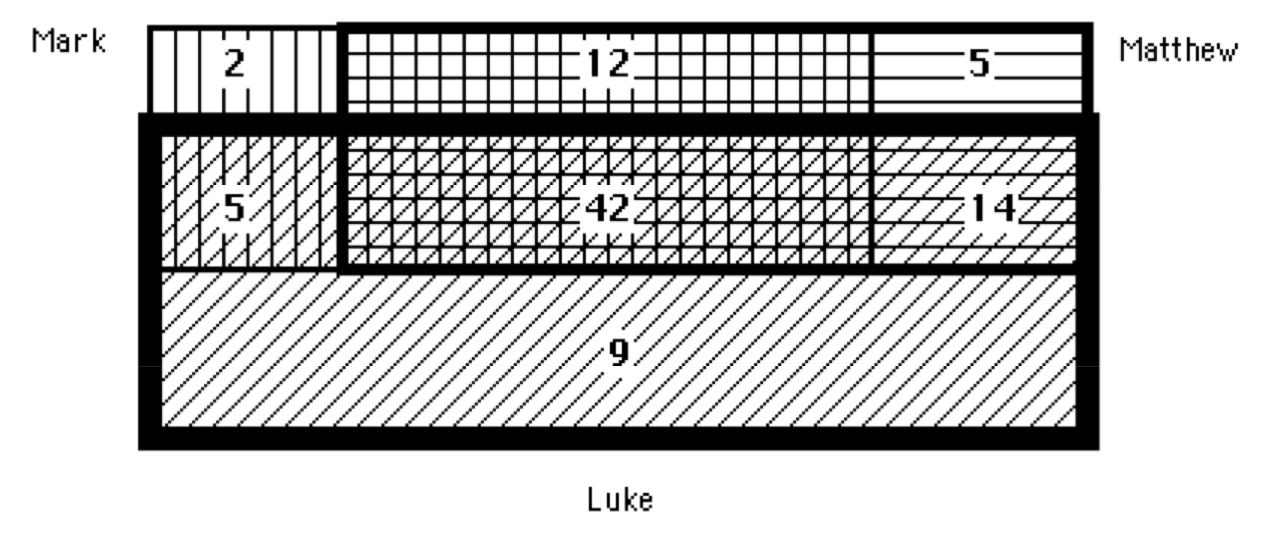
The Seven Churches of Asia
I. Literary Analysis
Read Essay →The Seven Days of Consummation
Part I: Recurring Elements
Read Essay →The Synoptic Gospels
Scholars speculate about synoptic origins in an effort to create a scenario for the features of the first three gospels as a set. We do not have to settle on what actually explains the phenomena; we need only develop credible possibilities for explaining those features.
Read Essay →The Witness of Acts to the Kerygma
Introduction
Read Essay →Thessalonians Time LineChart
spring 51 (or 50)
Paul’s arrival in Corinth
Read Essay →Tracing Pauls Movements Behind the Thessalonian Correspondence
Acts 17:1 Paul comes to Thessalonica.
17:2 Paul spends three Sabbaths there.
Read Essay →Typical Issues in Critical Introduction
Critical introduction addresses several issues related to the study of documents. In this setting, “introduction” does not mean getting acquainted with a book’s contents for the first time. “Critical” introduction does not “criticize” the book as if to degrade it. Critical introduction evaluates the nature of a book and matters surrounding its origin.
Read Essay →Use of Amanuenses in the New Testament (Overview)
I. Basic Data Regarding Amanuenses
Paul used amanuenses Paragraphs explained as Pauline
Read Essay →Wisdom Literature
Introduction
The New Testament contains several literary genres:
gospels (Matthew, Mark, Luke, John)
Read Essay →