
Characteristics and Peculiarities of Romans
1. With the exception of Luke 20:16, Romans is the book that most uses the Pauline expression God forbid (μὴ γένοιτο, mē genoito): 3:4, 6, 31; 6:2, 15; 7:7, 13; 9:14; 11:1, 11. It appears also in 1 Corinthians 6:15; Galatians 2:17; 3:21; cp. 6:14.*
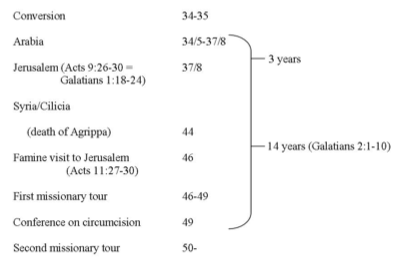
Read Essay →Chronology of the Life of Paul
Origin of the Roman Church(es)
At least three household churches existed in Rome by the time Paul wrote to the
Read Essay →Recensions of Romans
1. Placements of the doxology (16:25-27 in the standard English text)
a. At end
Read Essay →Romans: Origin, Date, and Destination
I. Origin
Paul wrote Romans after the acquaintances previously known from elsewhere had moved to the imperial city (16:3-16), after he had preached from Jerusalem to Illyricum (Romans 15:19, cp. 23), while he was in route to Jerusalem with the offering for the saints (Romans 15:25-28, 31), and at a time when he anticipated preaching the gospel in Spain (15:24, 28-29). According to Acts 19:21-22, while Paul was still in Ephesus on the third tour, he planned to go to Jerusalem and then to Rome. On this third tour, Paul organized the collection for the poor Christians in Jerusalem (cp. Acts 20:4; 21:15; 1 Corinthians 16:1-9; 2 Corinthians 8-9). Having left Ephesus after the riot, Paul journeyed north through Troas, across through Macedonia, and down to Greece (20:1-6) before returning through Macedonia and down the east coast of the Aegean Sea to Miletus and on to Palestine. He had not planned to minister again in Asia (Acts 20:25, 38). His three-month stay in Corinth during this trip would have given him time to compose Romans.
Read Essay →