
Sketch of Propositions and Presuppositions
SKETCH OF PROPOSITIONS AND PRESUPPOSITIONS
on the use of 2 Samuel 7:14 in Hebrews 1:5b
Virgil Warren, PhD
I. While 2 Samuel 7:14 must refer to Solomon because Solomon so understood it (1 Kings 6:11-13; 8:17-21), it cannot refer exclusively to him since the context speaks of an eternal seed (2 Samuel 7:16).
II. By the nature of the case, there can be only one universal eternal kingdom. So Daniel 2:(35) 44; Psalm 89:27 + 4, 36; and therefore the universal kingdom of Psalm 2 (first quotation) and the eternal kingdom of Psalm 110 (last quotation) must all refer to the same thing as the eternal kingdom of 2 Samuel 7 (as well as Psalm 89; Isaiah 9; etc.).
Without hands (Daniel 2:34-35) means "from/by God" (cp. 8:25). This expression and this context in Daniel is probably in the Hebrews writer's mind, because he uses it elsewhere (9:11, 24; cp. Mark 14:58; Acts 7:48; 17:24; 2 Corinthians 5:1; Ephesians 2:11; Colossians 2:11). The phraseology occurs nowhere else in the Old Testament.
III. Seed is collective for the whole Davidic dynasty as a series, rather than individual for Solomon alone. Psalm 89:29-30ff, a Psalm parallel to 2 Samuel 7, interprets seed as descendants. All the third personal singulars in 2 Samuel 7 are grammatical consequents of the word seed. He, his, and him are grammatically third person singular references to the collective noun seed, rather than he as in Solomon. The successive collective descendants of David in turn fill the slot called "seed" with the Messiah as son par excellence.
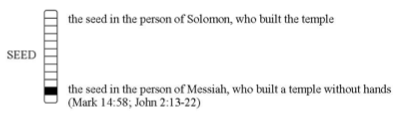
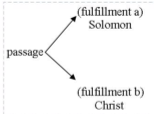
IV. The approach is exegetical; its meaning is derivable from the Old Testament text by the principles of interpretation. The approach is not like taking 2 Samuel as one of the following formats:
A. A reference to two different things at once
B. Type to antitype
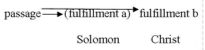
C. Accommodation

Note: Biblical interpretation uses no principle that is not found in human language generally (contra, e.g., Milligan, New Testament Commentary on Hebrews, p. 60). A person, for example, may intend more in a statement than a hearer can derive from it (as in type-antitype), but that is not the case in this use of 2 Samuel 7:14. The point made can be derived from the Old Testament through the principles of hermeneutics; so revelation is not necessary to understand this Old Testament text in the way the Hebrew writer takes it.
christir.org