
Notations on the Documentary Theory
NOTATIONS ON THE DOCUMENTARY THEORY
FOR ORIGINS OF THE PENTATEUCH
Virgil Warren, PhD
Criteria for Source Identification
Structure. A brief statement of the literary basis for source documents here anticipates objections raised against the approach. The theory appeals to parallel accounts as a phenomenon that betrays variant origins for the story they tell. Important doublets are the following:
Creation Accounts Genesis 1 (PE); 2 (J)
Flood Narrative Genesis 6-8 intermixed
Naming of Isaac Genesis 17:17 (P); 18:12 (J); 21:6
(E)
Joseph’s Abduction into Egypt Genesis 37:25 (J); 37:28 (E)
Sarah as Abraham’s Sister Genesis 12:10-20 (J); 20:1-18 (E)
[cp. 26:6-11 (J) for Isaac and
Rebekah]
Flight of Hagar Genesis 16:4-14 (J); 21:9-21 (E)
Naming the Well of Beersheba Genesis 21:31 (E); 26:33 (J)
Plagues Exodus 7-11 intermixed
The compiler/redactor(s) of the Pentateuch spliced these together from different sources.
Style. Style includes (a) the variant names of persons, places, and groups. The variation between divine names has been especially noted: Yahveh and Elohim. Other examples include two words for female slave: shiphi (J) and ’amah (E); for the mountain of God: Sinai (J, P) and Horeb (E, D); for the pronoun “I”: ’ani (P) and ’anochi (J-E). A second turn to the matter of style is (b) flowing narrative (J) versus arid and precise types of presentation (P).
Content. Variant views of God correlate with the difference between the names for him. Yahveh carries a more anthropomorphic view of God while Elohim pictures him more impersonally and transcendently as derivatives of “power,” the meaning behind the word God.
Objections to Documentary Criticism
1. Biblical association of Mosaic authorship with Pentateuch materials. The New Testament references to the Pentateuch with “Moses said” might be understood in a historical, rather than a literary sense, so the way the text came to its final form would be left unspecified. Paul and Jesus, however, go on to speak of Moses as writer of materials they cite: “Moses writes that the man who does the righteousness that is of the law shall live thereby” (Romans 10:5; Leviticus 18:5). Other passages are Mark 12:19 (= Luke 20:28), Luke 24:27; John 1:45; 5:46-47 based on Deuteronomy 18:15, 18. “If you do not believe his [Moses’] writings, how will you believe what I’m saying?” John 5:47 sounds like a generalized statement regarding Mosaic writings.
Readers expect Jesus to mean by these writings what the Jews understood as Moses’ work since he does not explain the reference or object to their identifying Moses with the Pentateuch. Jesus addressed people who had no better way than we do to distinguish between parts written by Moses and parts written by someone else. He would, then, be assuming with them a common understanding of such matters. Beginning with New Testament delimitations requires rejecting the documentary hypothesis, because there is no way to attribute Mosaic authorship to the Pentateuch materials under such a scheme. Furthermore, the motive behind such criticism is to take the Pentateuch from his hand and put it much later. There is no way to imagine a reliable body of literature that came together under the circumstances and in the manner that documentarians propose.
The Pentateuch itself speaks of God’s commanding Moses to write and of his putting the commandments of Yahveh in a book: Exodus 17:14; 24:4; 34:27-28; Deuteronomy 31:9, 19, 22, 24. When we begins with the claim of the text, it does not allow for the manner of origination involved in the typical formulation of JEDP, and so on.
2. Circularity of procedure. The kind of material chosen for a document affects style and vocabulary, because content determines these matters. Notably in the case of P the “arid and precise” manner of presentation comes from the nature of legal materials. Furthermore, the “precise and structural” idea is about the only reason for assigning a section like Genesis 1 to the P source.
With J and E, the choice of the names correlates with the content. “Yahveh” appears in the interpersonal/covenantal sections and lends itself to anthropomorphisms; “Yahveh” appears where imminence is involved; “Elohim,” based on power, appears where transcendence and sovereignty predominate.
Documentary criticism relies heavily on the concurrence of phenomena instead of any one criterion. Its appeals to multiple names for God in other literature do not receive proper weight since the correlation of criteria in biblical materials supposedly override such observations. But the correlation of criteria is not neat and complete. Instead of viewing this as evidence against the original hypothesis, critics postulate redactors as a mechanism for “mixing” the phenomena across documents. Evidence does not become decisive under these circumstances. Rather, the conclusion is assumed in the process of formulating the argument and organizing the data, so the criteria are not arguments for the conclusion. At best they could represent attempts at maintaining consistency. We have argued above that they do not even accomplish consistency as measured by other Near Eastern literary examples.
3. Obliviousness to Near Eastern scribal practices. Even if the documentary theory were consistent with the internal data, it would not accord well with other Near Eastern literature. Parallelism, parataxis, repetition, and multiple names characterize Semitic style as monument inscriptions demonstrate. Scholars formulated source critical theory in the 1700s in a relative vacuum of Near Eastern literature. Subsequent archaeological discoveries do not confirm their assumptions, yet critics retain the theory despite an artificialness that deviates from occidental literary practice.
4. Claim of being scientific while not subject to falsification. We suspect that using the label “scientific criticism” tries to give respectability to what is artificial, contrived, and inappropriate. A procedure is not scientific if it is not subject to verification and falsification. Such literary critical methods can never come under objective criticism, because critics can postulate another redactor or another source to cover the stray data that do not fit the scheme as it now stands. The problem comes from needing to provide adequate, positive, objective evidence for the idea in the first place.
5. Creation of further difficulties. After parceling up the text into sources, an interpreter cannot use information in one source to contextualize information in another. By decontextualizing the phenomena, the documentary theory creates contradictions would not otherwise existent in the whole. For example, the order of creation in Genesis 2 supposedly contradicts the order in Genesis 1. But if we accept the unified literary structure of these chapters, we understand Genesis 1 and 2 as different topical arrangements, and feel no urge to “explain” the man before the plants and animals in Genesis 2.
Another resulting difficulty is the supposed historical framework in which this parceled-up literature came to exist. Having destroyed by division the natural history of Israel that gave it order and sequence, a source critic has to provide another one. With the historical structure gone, a philosophical one substitutes for it. The theory of evolution, or unilinear progressivism, substitutes on the assumption that relative progress in time correlates with relative progress in refining ideas. A critic goes through the Pentateuch and the rest of the Old and New Testaments and lays out the portions in terms on the relatively advanced nature of the concepts. In this way critics construct a pseudo-history. They can qualify the attempt to tie in the advancing of religious ideas with contacts between Israel and the Egyptians, Canaanites, Babylonians, Greeks, Romans, and so on. It stays in the naturalistic and evolutionary framework for its presuppositional base. Archaeological discoveries come into the picture to flesh out the theoretical understanding. Cultural contact supplemented by dynamic inspiration substitutes for the revelation the text claims for itself throughout.
6. Literary base. Documentary theories are constructs that tie to literary considerations, but they do not take all literary considerations into account. If divine names serve as criteria for sources, a critic risks assuming that the Masoretic text preserves the original reading. A significant number of cases exist when the LXX reads differently on whether Yahveh or Elohim stood in the text from which the Septuagint translators worked a couple hundred years B.C.
7. Alternative analysis more in keeping with the data. Genesis 1 and 2 affords the most plausible evidence for the documentary theory, and it was probably what suggested the idea and prompted a search for additional examples. The alternate analysis for these chapters notes that the first represents a more complete topical origination of the universe and world from an omniscient and geocentric viewpoint while the second gives a more restricted topical treatment organized around mankind, the crowning piece of creation (anthropocentric viewpoint). Genesis 2 deals exclusively with human work of cultivating plant life and with being distinct from the animals.
Chapter 2 does not mention aspects in the broader picture: sun, moon, and stars; light and darkness, bases for the cycles of time, dry land and ocean, fish in the sea; and the creeping, crawling things that were too different from humans to warrant comment or concern for keeping them distinct.
Chapter 2 adds details about the man-woman, husband-wife relationship in humankind (internally) whereas chapter 1 presents humankind (externally) in relation to the creator (imago dei) and the surrounding creation (the dominion mandate). Chapter 2 adds the weather feature that the first chapter omits (rain) in keeping with its notation about mankind cultivating the ground for producing food.
Elohim is the name used in chapter 1, because it treats topics that associate with God’s sovereignty and power; the root idea in Elohim is power. Yahveh occurs in chapter 2 because relational concerns dominate. The covenant name for God connects with marriage and human distinction from the animal kingdom. The ordered style comes from presenting a more complete picture of origins. The more flowing style fits with the relational nature of mankind and the world in the second statement
8. Motivation from which documentary criticism arose. Historically, documentary theories derive with skepticism, deism, rationalism, antisupernaturalism, and other forms of disbelief. The purpose of negative literary criticism has been to provide an alternative to the claims of Old Testament texts themselves. If an alternative formulation can present a scholarly-looking expression, disbelief seems more justified. Scholars do things with biblical materials that would seem pointless elsewhere. Where else does such literary analysis happen? The critical analysis reflects the disbelief in its originators
9. Destruction of literary forms.
(a) The telescoping pattern of Genesis 1-2 is destroyed. Three ways of relating 1:1 to 1:2-31 diagram as follows:
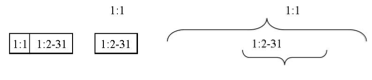
In the first instance 1:1 is prior to 1:2ff; gap theorists, among others, adopt this format. The second diagram makes 1:1 a heading for the following narrative (as in The Living Bible) with the result that no statement of original creation, or creation from nothing, occurs in the book of beginnings. The third pattern seems most preferable in that it (1) gives a statement regarding creation from nothing (John 1:1-3; Colossians 1:16; Hebrews 11:3), (2) provides for a statement of completed creation on the analogy of Isaiah 45:18, and (3) puts 1:1 as more than a label for the six-days framework stated in Exodus 20:11; 31:17.
If the above construction correctly follows the thought of the writer, then the pattern of elaboration for Genesis 1-2 takes this shape:
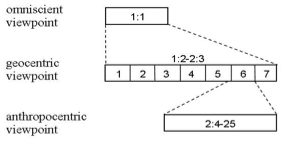
An approach like JEDP does not fit the pattern because it presupposes the same character for Genesis 1 and 2 and a different relationship between them (parallel rather than complementary and elaborative). Consequently, according to JEDP the present structure of the text is contrived and does not represent what one author wrote.
The elaboration in Genesis 2 of its related humanity materials in Genesis 1 anticipates another elaboration in Genesis 3 of the humankind material in Genesis 2. In 2:5 the text speaks of mankind as not yet present to cultivate the ground. “Serving the ground” leaps over the scenario in Genesis 3 about the Orchard full of trees, the forbidden tree whose fruit Adam and Eve ate anyway, which in turn brings in death (19b), pain in childbirth (16), and “serving the ground” (17-19a). In further elaboration, the account about two sons of Adam and Eve brings the created world into another degree of deterioration when Cain kills Abel. That brings in the enmity between people (internally) that carries forward the enmity between people and Satan (externally, 3:15); it also introduces ground “that will no longer yield its strength to you.” This whole pattern of enmity between people and between people and God finally leads to the destruction of the world by Noah’s flood (Genesis 6-7), after which God starts over with what amounts to the middle of Day 6 in Genesis 1.
The plain dominion mandate of Genesis 1:28 gets elaborated into “serving weakened ground” (4:12) after death and expulsion from the Garden to serve the ground (3:22-24) because of human sin.
(b) The pattern of “these-are-the-generations-of.” If we accept the idea of R. K. Harrison and others that the structure of Genesis is indicated by the recurrent expression “these are the begettings of,” we find the JEPD documentary scheme out of phase with it. For a description of the system, see Harrison’s Introduction to the Old Testament, p. 542ff.
(c) The covenant forms in Genesis 31; Exodus 19, 34; Joshua; and Deuteronomy 1-32 get crisscrossed by the theoretical documents. Treaty forms are literary forms known from elsewhere for the late second millennium B.C. and should take precedence in criticism over theoretical reconstructions.
christir.org