
Values of Biblical Languages for Bible Study
VALUES OF BIBLICAL LANGUAGES FOR BIBLE STUDY
Virgil Warren, PhD
Knowing biblical languages does not leave you so much at the mercy of translations. One disadvantage of having to work through a translation is that (a) no two languages match up exactly. A vocabulary item in one language seldom has the same range of denotations and connotations as the closest corresponding word(s) in another. The same thing applies to phrases, sentences, word endings, and particularly idioms, a culture’s customary usages of its language’s mechanisms.
A second disadvantage of using a translation is that (b) translation and interpretation are inseparable. Translators cannot translate what they do not understand. If a group of translators does not properly understand certain doctrinal concepts, that distinctive viewpoint will find expression in their work.
Since languages do not match up exactly, three values of biblical language study can be pictured by overlapping circles. First, (1) knowing the original languages eliminates some ways of understanding the English wording. In the accompanying diagram the shaded area represents interpretations of the English wording that do not fit with the meaning of
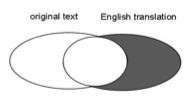
the original text. These misinterpretations can come from the reader’s making something out of the wording that even the translators did not intend. For example, an English reader might try to distinguish between “eternal” and “everlasting,” not realizing that these words are two translations for the same Greek or Hebrew term. On the basis of archaic translations, many teachers have misused Paul’s statement to Timothy to “study to show yourself approved”; “study” means to give diligence, not to “study” a book, as we use the word today. Many preachers have sought to magnify the preaching ministry by reference to “the foolishness of preaching” in 1 Corinthians 1:21, when the point of the text has to do with the foolishness of “the preached thing” (the message).
Second, (2) knowing the original languages brings up possibilities an English translation would not suggest. English cannot reproduce all the possibilities that the first language contains. Once translators decide which option to use, the English reader is cut off from any other
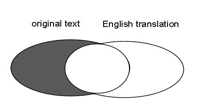
possibility except in cases where an alternate rendering appears in the margin or in a footnote.
Since languages do not match up in their level of specificness, among “new possibilities” may be included the fact that the original author was not expressing as exact an idea as English options force translators to use. The translators’ task is not, then, a matter of choosing between options so much as it is a matter of being forced—at least by preferred English idiom—to speak more precisely or loosely than the original. In so doing, they may unwittingly express something that really comes out of their own biases. Furthermore, the original author may not have been expressing as exact an idea as translators and commentators have typically assumed (e.g., Romans 9:22—“vessels fitted/fitted-themselves/fit for destruction”—or Hebrews 6:4—“because they recrucify the Son/while they recrucify the Son/recrucifying, as they are, the Son”). Perhaps an idea is biblical—that is, expressed elsewhere directly or at least necessarily implied, but it does not belong to this passage.
Since languages do not match up exactly, (3) knowing the original languages helps regain nuances that are lost in translation. Even if there is nothing incorrect, misleading, or
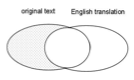
apparently unclear about a passage in translation, something of the richness and flavor of the writing may be lost.
(4) Knowing the original languages puts at your disposal study tools that you cannot use profitably without knowing the original languages. Under this observation we can include more advanced commentaries. You will not understand their discussions of grammatical points and the bearing of those points on the meaning of a passage, and you will not see how two or three quite divergent ideas could possibly come from the same Greek or Hebrew statement. Other tools include Greek concordances and lexicons (dictionaries) as well as Kittel’s Theological Dictionary of the New Testament and the like. Using only an English concordance on the word love, for instance, gets only those places where the Greek word ἀγάπη is translated “love.” It misses cases where it might be rendered “charity” or “like.”
(5) Knowing the original languages puts you in a better position to evaluate what other people say the Greek “really means.” They sometimes like to create a scholarly impression by telling you what the Greek says. They remove the possibility of discussion by appealing to something most people are not in a position to handle. How many times have you heard someone say that the Great Commission really says, “As you go, make disciples”? Someone, somewhere heard enough to know that a Greek participle can replace a clause and that it may have the value of progressive action. What that person did not know was the difference between aorist- and present-tense participles. “As you go” would be a possibility in Matthew 28 if the participle were present, but it is aorist and joined to an aorist imperative, which gives it an imperatival force, because the participle picks up the mood value of the associate finite verb.
This observation applies to preachers, teachers, and others in everyday oral settings. It applies as well to written tools like commentaries and theological studies. It applies to Bible versions themselves. You may note that translations differ in a certain passage, but without knowing the original languages you are not in much of a position to choose which is correct or best. Neither can you stand above commentaries and other study tools that you use. Either you have to let it pass—probably the wisest course—or you risk being misled.
(6) Knowing the original languages has the more generalized value of making you aware of how languages work, which has a subtle and therefore important impact on interpretation. The study of any foreign language has this value. When people are not exposed to any language but their own, they has no vantage point from which to see how languages can differ. Consequently, they have no basis for appreciating the kinds of problems that exist in going from one language to another or for appreciating the fact that other phenomena do exist besides the ones in their own language. Studying foreign languages helps untie them from the linguistic peculiarities of their mother tongue, peculiarities they are not consciously aware of until they see that other languages do not have them or have different ones.
Untying ourselves from our own language also has an important impact on thinking. Correct thinking deals with reality, but language is always something expressed from the subjective side. Therefore, proper thinking demands that we not confuse language and the reality it points to. Linear and punctiliar action, for instance, is a distinction we make in mind; it is not a difference in the “length” of the action itself. “I washed the car” and “I was washing the car” can both be said about the same case. Theological distinctions about the reality of salvation, or whatever, should not be based on such verbal differences, but people not astute about the way language functions constantly make erroneous inferences from such things.
Our comments on the value of biblical language study assume knowing Greek and Hebrew rather well. Like most other areas of learning, languages become dangerous tools if they are misused. “Pop theology” gets started by people that know just enough to make them dangerous.
If you do not know Greek or Hebrew, there are some things you can do to help compensate. First, you must use a modern translation. You may not realize that certain phraseology is archaic. (Note the “study” and “preaching” illustrations above.) Secondly, you can compare translations to locate places where translators vary in how they think the text should be rendered. Third, commentaries you can consult sometimes discuss these differences in ways the English-only reader may not understand. If you know even the Greek and Hebrew alphabets, you have access to study tools organized alphabetically. But you must remember that meaning is much more than a vocabulary matter. Failure to observe this point creates a lot of bogus exegesis, which contributes again to the problem of “pop theology.”
In a four-year undergraduate program, it is not easy to study both Greek and Hebrew—at least in much depth. Consequently, Christian colleges prioritize Greek because of the more direct connection between Christianity and the New Testament. Aramaic is seldom offered at all since only a small portion of the Old Testament is written in that language.
While emphasizing the importance of original-language study, we do not want to claim too much for it. It does not provide the answer to all exegetical problems. The common claim that Greek is the most precise language that ever existed is a notion that is not linguistically sound. A language is precise relative to the purposes of the culture that uses it. When you ask about how good a language is, you have to ask, “Good about what?” In general, Greek is probably not as precise as English. There are a number of ambiguous points in the language. One is caused by its love for participles, and participles may cover for time, means, manner, cause, condition, concession, purpose, result, coordinate circumstance, accompanying circumstance, and other concepts. Another point of ambiguity lies in the use of the genitive case, which often can come into English as an “of” expression. In many circumstances all the genitive case does is tie one noun to another; how the referents of those nouns really relate has to be determined by the law of harmony, the law of contrast, and the nature of the case. While many biblical issues can be settled aside from a knowledge of the original languages, some cannot be settled any other way.
christir.org