
Gifts of the Holy Spirit
Gift(s) of the Spirit
I. Greek Terminology for Giving
A. δίδωμι: Acts 2:4, 19; 8:18; 14:3; 15:8; Romans 5:5, etc.
B. μεταδίδωμι: Romans 1:11; 12:8
C. δόμα: Ephesians 4:8
D. δωρεά: John 4:10; Acts 2:38; 10:45; 11:17; Ephesians 4:7; Hebrews 6:4
E. μερισμός: Hebrews 2:4
F. χάρισμα: Romans 1:11; 12:6; 1 Corinthians 1:7; 7:7; 12:4, 9, 28, 30, 31;
2 Corinthians 1:11; 1 Timothy 4:14; 2 Timothy 1:6; 1 Peter 4:10
Several other words translated “give/gift” are not used in reference to the Holy Spirit: ἀποδίδωμι, διαδίδωμι, ἐπιδίδωμι, παραδίδωμι, δωρέομαι (2 Peter 1:3? but no clear usages of Holy Spirit), δώρημα, ἀνάθημα, ἀπονέμω, χάρις χαρίζομαι, χορηγέω, δῶρον (used of salvation in Ephesians 2:8, but no usages of Holy Spirit).
II. Application to Holy Spirit Matters
A. The relationship/state/situation with the Spirit
1. The original sending of the Spirit: John 7:39; Acts 2:1 ff.
2. The right to become sons of God: John 1:12
3. The salvation status as given: Acts 11:18; Ephesians 2:8
4. The gift of the Holy Spirit to individuals: Acts 2:38; 1 John 3:24
B. Results that come (a person’s response to influence): 1 Corinthians 3:6 (“God gives the increase”)
C. Acts done by individuals (“allow”): Daniel 2:36-38; 1 Kings 12:15; John 5:26; 6:65; 19:10-11; Revelation 7:2; 9:5; 13:5, 7
D. Slots of service among God’s people: 1 Corinthians 12:28a; Ephesians 4:7, 11 (means “slots” because of the word till)
E. Persons filling the slots: Acts 20:28 (“made”); 2 Corinthians 10:8 (=13:10); Colossians 4:17 (“ministry I received”); 1 Timothy 4:14; 2 Timothy 1:6
F. Abilities to accomplish the tasks in these slots (lists of gifts of the Spirit: Romans 12:6-8; 1 Corinthians 12:28-30; Ephesians 4:7-11)
1. Natural abilities: Matthew 19:11 + 12; 1 Corinthians 7:5-7 (“continence”)
2. Developed skills: Acts 4:29 (“boldness”)
3. Supernatural endowments: Acts 8:20; 10:45; 11:17; 1 Corinthians 12:28b
G. Activities to be performed: 1 Corinthians 12
III. A Proposal Regarding Gifts of the Spirit
Everything a person is able to do or enabled to do is a gift of the Spirit.
A. Lists of gifts of the Spirit: Romans 12:6-8; 1 Corinthians 12:28-30; Ephesians
4:7-11
B. A natural ability or developed skill becomes a gift of the Spirit when it comes under the Spirit’s influence.
C. Weaknesses of the traditional view
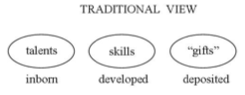
In the traditional view the word gift is associated with directly and supernaturally
deposited capacities.
1. It encourages waiting.
2. It encourages self-justification for not doing something.
3. It encourages false expectations, which brings doubt about a person’s
relationship to God and opens a person up to false teachers and misguidance.
4. It encourages misinterpretation of something as a supernatural gift with the implication of unreal certainty and insusceptibility to correction from other Christians.
D. Strengths of the proposed view
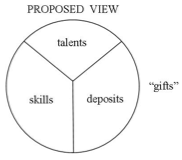
1. There is both a sense of assistance and a sense of responsibility.
2. A person can take no credit for succeeding or cast no blame on the Spirit for
failure.
3. Everybody has something to do because everybody has a gift.
4. The proposed view affirms people as God made them.