
Notations on General Revelation
NOTATIONS ON GENERAL REVELATION
Virgil Warren, PhD
I. Terminology
General revelation refers to natural experiences in the natural universe. Special revelation refers to what comes through visible divine intervention into the natural. The former deals with nature, natural processes, natural events, and can include social processes, human history, subjective experience. The latter deals with supernatural intervention that a person can recognize as supernatural because it does not occur naturally. Intervention labels what God causes beyond what natural process produces. It refers to supernatural occurrences and their meaning given through special revelation. For us, special revelation centers on the revelation preserved in scripture. General revelation comes through the aspects of reality that science studies. Special revelation comes through scripture and involves inspiration. General revelation serves as the basis of philosophy, which uses reason to “discover” truth from experience. Special revelation is the basis for theology, which uses reason to “understand” truth in light of experience.
General revelation differs from special revelation in the way it comes—through natural rather than supernatural operations. General contrasts with special rather than with specific, even though general revelation is less precise in what it can make known. It is called “general” because it occurs everywhere at all times whereas special revelation occurs to special people at special times and places.
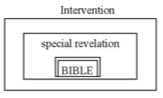
Intervention means supernaturally coming into the natural. Some intervention is visible intervention that conveys special revelation. The part of special revelation that is available to us is in the Bible. (Not every special revelation has been written, and some inspired writings may no longer exist.) For all practical purposes, special revelation is the Bible, as far as we are concerned—though some people do believe in continued revelation either to the church or to individuals.
II. Values of General Revelation
A. General revelation primes interest in special revelation. That is the sense in which Paul used general revelation in presenting the gospel to the pagans in Lystra (Acts 14:14-18) and Athens (Acts 17:22-31). The created world around them was the “point of contact” he used to introduce them to Yahveh with a view to reconciling them back into relationship with him. In this role, general revelation precedes special revelation.
B. General revelation confirms special revelation. Psalm 19:1-6 says that the heavens declare the glory of God (cp. Isaiah 40:26; Psalm 8; 33:4-9; 50:6; 62:11; 74:12-17; 147:4). As a matter of fact, that is what they are doing. A person with no access to a knowledge of the true God may not realize that the heavens are declaring the glory of Yahveh rather than some other deity, pantheon of deities, or nature in operation. At least to believers, the heavens declare the glory of the God who has previously made himself known to them. It provides general content both rational and affective. Once there is special revelation as communication, there can be general revelation for communion. In this role, general revelation succeeds special revelation.
Romans 1:18-32 appeals to general revelation to confirm special revelation: “Having known God, they did not glorify him as God . . . but became vain in their reasonings . . .” (1:21). General revelation is clear enough to keep us who know God from turning away to some other view of God or some other way of living based on that false substitute. What we can see in general revelation is clear enough to condemn us for turning away from what we know by special revelation. Nothing in the world around us requires any other explanation than the true picture of God we already have. Since the explanations to which people have turned are less adequate than the one known through special revelation, we stand condemned by general revelation for turning away from what we know through that special revelation.
C. General revelation may show the greater likelihood of theism over atheism. Philosophers have developed arguments for the existence of God: the ontological argument, the teleological argument (argument from design), the cosmological argument (the universe is not sufficient for explaining itself), the moral argument. Different philosophers consider one or more of these arguments to be valid. Even if the arguments are valid, they are difficult to defend against some objections. So, the “theistic proofs” create likelihood for theism than positively proof. Even if valid, they are inadequate for knowing how to relate to God. In this third role, general revelation is simultaneous with special revelation.
General revelation serves these three functions, but it has three limitations: (a) it cannot prove the existence of the God of the Bible; if it can, (b) it cannot give an adequate view of him; and (c) it cannot tell us enough to save ourselves.
III. Integrations
There is a correlation especially between general revelation and the subjective side of for apologetics. From interaction with the natural world, we consciously or unconsciously recognize that life is bigger than we are. Our own nature in this setting creates a sense of need. The natural order in and around us “primes” our interest in the answers God gives
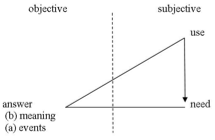
through special revelation to meet those needs. After the answer in special revelation has been provisionally accepted, new believers “confirm” the truthfulness of that answer by using it—experiencing its solution to those perceived needs. They also observe that nothing in experience or nature requires any other explanation for life and the universe than what special revelation has taught.
The three roles of general revelation identified above under “Values of General Revelation,” correlate with the three aspects of apologetics. Need corresponds with “priming interest in special revelation.” Answer parallels “showing greater likelihood of theism over atheism.” Use correlates with “confirming special revelation.”
If there is a correlation between general revelation and apologetics, then general revelation has a positive role in evangelism and missions because they deal with commending special revelation (the gospel) to people with general revelation only. So Paul could appeal to nature in describing the God he had come to these people to represent. Additionally, some theologians think that general revelation ends up having a negative role among the unevangelized: it serves as the basis of condemnation for all those who have not had access to special revelation. The two aspects of general revelation—internal conscience (Romans 2) and external creation (Romans 1)—combine to leave a person without excuse for misbelieving and misbehaving. (See “An Alternate View,” below.)
IV. An Alternate View
The treatment above has assigned to general revelation a role chronologically prior to special revelation. It can whet the appetite for hearing proclaimed truth. Another approach says that general revelation can have a role logically prior to special revelation. The witness of nature and experience can provide preliminary truths about God, which then serve as the foundation for special revelation. So to speak, philosophy precedes theology. By nature around and within, we can come to a true (albeit incomplete and inadequate) understanding of God. In the missionary enterprise, we can use reason to show that there is a transcendent, all-powerful, and perhaps even holy, God and then add the Christian message to fill out the picture and offer salvation to people alienated from that God.
Under this construction of the role of general revelation, by implication people stands condemned because from creation and conscience people ought to come to a true knowledge of God and moral behavior. Their failure to do so reflects their depravity, the fallen nature supposedly inherited genetically from Adam as a result of his original sin. Such a view assumes that general revelation is sufficiently clear that people without depravity to blind them could derive enough from it to condemn them for perverting their understanding of God and moral behavior.
Paul’s presentation in Romans 1 is cited as evidence for this approach. Appealing to general revelation is appropriate or the apostle would not have done that in Romans and elsewhere; but we must ask what purpose he had in mind for referring to general revelation in these cases. Using it to pique interest, make a point of contact, confirm special revelation, and even show the likelihood of theism is different from using it as a logical basis for God’s word revelation. Modern creationists effectively use the former approach against atheistic evolutionary philosophy. In Psalm 19, Acts 14 and 17, inspired writers simply affirm that the heavens declare God’s glory or that he made them. They do not offer arguments to prove that God created them from nothing. It is not evident that they are appealing to nature as logical preparation for accepting special revelation or for condemning people for false views of deity and morality.
That last step is something traditional thinkers have done. They have tried (1) to demonstrate from reason the existence and nature of God together with the freedom of humankind and the immortality of the soul. Then, transitioning from reason to faith, (2) they call for yielding to the authority of the church to interpret special revelation. Paul may, in fact, be affirming the opposite of that scenario when he declares in 1 Corinthians 1:20, “The world by its wisdom did not come to know God. It was God’s good pleasure through the foolishness of the preached message to save them that believe.” (For a treatment of Romans 1, see the document entitled “The Relationship of General Revelation to Theistic Philosophy in Romans 1-2.”)
christir.org