
The Nature of Theology
THE NATURE OF THEOLOGY
Virgil Warren, PhD
I. The Nature of Theology vs. Exegesis
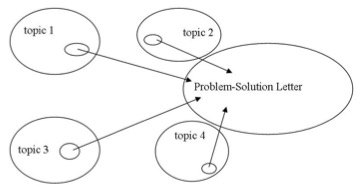
For the most part, the epistles of the New Testament are problem-solution writings; they were written to deal with difficulties in particular times and places. In the process of answering the problems, the apostles drew upon information on many topics that relate to the need. Not everything about any one topic is in any one place; so readers have to assemble the partial treatments and combine them to form the whole picture. In exegesis, readers follow along the present line of presentation. Theology requires an added step beyond following the line of thought: the readers topically arrange the data into a harmonious whole so they can understand the message itself instead of just one presentation that contains parts of that whole. Exegesis deals with the text; theology deals with the topic. Exegesis operates verse by verse; theology operates with the truth itself as information gathered from the several contexts that address it.
II. The Nature of Theology vs. Philosophy
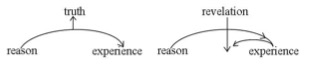
Philosophy uses reason on experience to originate an understanding of total reality. Since even corporate human experience is limited, the worldview that can inductively emerge from individual or collective experience is necessarily limited. This approach equals the process called the scientific method.
Theology uses reason on revelation in terms of experience. Experience supplies the basis for the meaning of words that must be known to understand verbal revelation from God. Reason provides the capacity to recognize the correlation between communication and experience, to deduce from what is directly said the implications regarding other matters necessary for meaningful existence, and to understand the values and purposes expressed in the revelation. God’s omniscience guarantees the correctness of the revelation, and his omnipotence guarantees its stability.
III. The Nature of Theology vs. Doctrine
A. Holistic
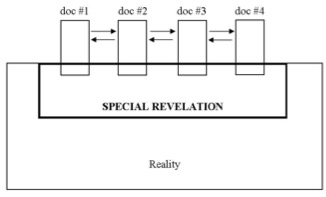
The topical character of theological study (in contrast to exegesis) should not be allowed to compartmentalize the truth itself. Listing topics can create the impression that they are really separate just because we mentally separate them by labeling. Truth itself forms a whole; so theology as a study of truth itself must retain in our understanding the same real wholeness truth itself has. Speaking of “theology” should emphasize that wholeness, because theology is the name for reality-truth conceived of in association with the ultimate Truth: God, who is personal/interpersonal. Putting various topics in connection with ultimate Reality is the rationale for phrases like “a theology of leisure,” “a theology of play,” “a theology of work,” “a theology of nature.” All areas of study can be theological topics in this sense. Theology “proper” refers to the study of God; but theology vs. philosophy, science, technology, and so forth, studies more than the nature and work of God himself. It looks at creation (angels, universe, humankind) and providence, revelation (general and special), salvation, ethics, worship, dispensations, the church, eschatology. Inasfar as these subjects are contemplated in relation to God, they are theology—especially since biblical theology studies those topics from what scripture reveals about them. Various “doctrines” need to be harmonized with each other as well as derived from “special revelation,” which is less than all the truth there is.
B. Education for use
Every truth needs to be connected with God and with the whole; but as stressed in the phrase “education for use,” all truth needs to be connected with practice. Education for use means personal use and ministry use.
C. The interpersonal context
Not only is all truth practical by being associated with “use”; it is practical by being consciously kept in its interpersonal context, including God.
christir.org