
A Map for Soul Care: Aspects and Processes
A MAP FOR SOUL CARE: ASPECTS AND PROCESSES
Virgil Warren, PhD
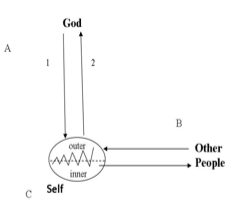
The Map and diagrams below picture the over-all process of Christian living and some patterns involved in that process as it moves along inside the broad arrow of time. The main features of the Map are vertical interaction between an individual and God, horizontal interaction with other persons, and the personal development that takes place at the junction of the two. Everything in a person’s own spiritual processes and in helping to care for the souls of others finds its place in this construct.
I. Aspects of the Map
The aspects of the main, threefold process connect to the other aspects, and the outgoing and incoming sub-processes are also not discrete operations. Nevertheless, the following activities belong primarily to aspects A, B, and C.
A. Vertical relationship with God
1. Divinely initiated
a. Creation in
God’s image
b. Revelation
c. Providence/divine guidance/intervention
d. Gifting
e. Relative freedom
2. Human responses and spiritual exercises
a. Bible reading/meditation
b. Following divine guidance
c. Worship
(1) Prayer/talking to God/reading answered prayer
(2) The Lord’s supper
(3) Giving
d. Stewardship of life
d. Exercising faith
e. Commitment including baptism
f. Love
g. Meaningfulness
B. Horizontal relationship to other people
1. Love
a. Love spirals
b. Expressing love
c. Products of love
2. Fellowship
a. Weaker-brother relationships
b. Dealing with differences/resolving conflict
3. Christian conversation
4. Influencing for Christ/witnessing
5. Leadership: obtaining and exercising
6. The home: marriage and parenting
C. Personal development
1. Growth processes/sanctification
2. Assurance of salvation
3. Spiritual fruit
4. Possessing the body
5. Coping with temptation, trials, and suffering
a. Benefits
b. Attitudes
6. The Christian mind
7. Enhancing self-esteem
8. Managing the emotions
9. Psychological strength
10. Strengthening the will
11. Projecting into the future
II. Characteristics of the processes
A. Interpersonal
Interpersonal refers to that combination of capacities God built into us when he created us in his image. It contrasts with anything that lacks those factors or degree of them that does not enable personal operations. Examples in the hypostatic frame of reference, where results come from supernatural miraculous deposit; physical debasement as in flagellation, monasticism, asceticism, acts of penance, extreme fasting, and the like. Such things have little or no value in curbing sin (Colossians 2:20; Romans 13:14; 1 Timothy 4:8). Outgrowing sin is not satisfied by concrete operational procedure—like pilgrimages.
Interpersonalism replaces rules and regulations with realities. It looks away from legal enactment or any quantifying procedure as a “means of grace.” It sets aside religious ritual as having no value in cleansing the conscience (Hebrews 9:9).
B. Reciprocal
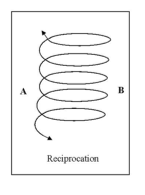
Reciprocal contrasts with straight-line series as the shape interaction always has in any growth pattern. A affects B, which turns around and affects A, and so the next entry—spiral—can take place. Soul care is more than something one person does to another—whether God or fellow man. The second person responds to influence rather than passively receives implanted result—as by miraculous “force,” or perhaps sheer authority. Instead, it calls for response and the kind of “effort” natural to the matter at hand.
C. Spiral
Not only does A affect B, which turns around and affects A; the return side comes around at a higher level than where the process began.
christir.org
D. Incremental
Change takes place by degrees over time (active continuum) rather than as instantaneous result (passive category change).
E. Outward-directedness
 The
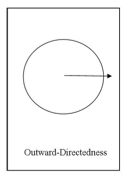
essence of virtue involves self-giving for the joy of others, that is, love. It
contrasts with self-centeredness, where the direction of activity is toward and
into the self rather than out of the self to the other.
The
essence of virtue involves self-giving for the joy of others, that is, love. It
contrasts with self-centeredness, where the direction of activity is toward and
into the self rather than out of the self to the other.
Spirit and spiritual have to do with the intangible; hence, it deals with the transcendent, and to a great extent it envisions the kinds of activities we can call “interpersonal.” Interpersonalism is the characterizing feature of the Christian faith, the arena in which it operates, the means by which it accomplishes, the manner in which it moves forward, and the kind of results it produces.
Based on a paper presented ASPEKT, November 3, 2017; Manhattan, Kansas