
Christian Parenting
CHRISTIAN PARENTING
Virgil Warren, PhD
INTRODUCTION
Basic Principle: The home is a specialized setting for interpersonal relationship.
On top of the interpersonal comes the responsibility-authority factor that parenting entails. That understanding establishes the attitude we take toward children and the way we deal with them.
Parenting is first and foremost a matter of relating to our young people as persons. Models for parenting are too often thought of as like being a (1) policeman, (2) friend, (3) counsellor, or (4) servant. The better approach is to start with personal relationship and add responsibility to it.
Love as the medium of personal relations becomes the medium for marriage and then parenting. If we love our kids, we automatically adapt love to that special situation. We naturally avoid abuse, exploitation, or neglect of kids we love.
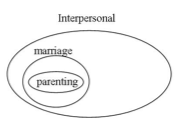
Parenting takes place within the context of marriage, which takes place within the context of personal relations.
Basic Principle: parents are for the children more than vice versa.
2 Corinthians 12:14b—ministerial setting and correlation
Parents have the resources and the experience.
Kids are not for carrying on our names.
fulfilling our aspirations.
giving us status.
getting our work done.
Parents provide security and instruction for their children.
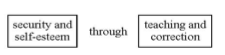
I. SELF-ESTEEM Psalm 127:3: a positive attitude toward children
Understanding creates attitude creates treatment.
A. Esteeming Them. We can enhance their self-esteem by esteeming them.
1. Children are our personal equals.
We = persons = children
We avoid confusing shorter with lower or lesser.
We can esteem them by noticing their admirable traits.
2. Children have some superior qualities.
Jesus chose children as models of kingdom citizens (Matthew 19:14).
Admirable qualities
a. Flexibility
b. Creativity-imagination
c. Curiosity-initiative
d. Humility
e. Language learning ability
f. Potential
3. So we do not talk down to them or treat them as secondary citizens.
B. Taking Time with Them. (quantity and quality time)
1. Doing with them things they like to do, not just what interests you.
2. Letting them help make decisions that affect them; we don’t just expect them to yield to your authority.
3. Supporting their activities; we do not just expect them to identify with ours.
4. Letting them express themselves, not butting in on them, stifling them, frustrating them (Ephesians 6:4a; Colossians 6:21).
5. Adjusting our schedule to include them, not just fitting them into our vacant
slots.
Patience is a prime parental virtue expressed in the five ways above.
II. SECURITY
A. Physical
1. Nutrition
2. Clothes
3. Shelter
4. Protection
B. Psychological: stable home life
1. Father-mother relationship
2. Sibling relationship
a. Do not let sibling rivalry go unchallenged.
b. Do not let one child discipline another.
c. Do not let older children “ride” younger ones.
III. TEACHING
Deuteronomy 6:4-7 (the Shema‘)
Proverbs 22:6: “Train up a child”
A. Everything we do we not only do but command and teach.
B. We need to stress particularly how to conduct ourselves, not just stress doctrinal
correctness.
C. We explain why as well as what kids should do.
Sometimes what we teach children, they disobey. So . . .
IV. CORRECTION (discipline)
Correction contributes toward security and self-esteem; therefore, make the motive and manner of correction conform to these purposes.
Again, correction is for the child, not so much for the parent.
not to save face.
not so much to make kids do what
we have told them.
not to get the job done for us.
A. Emphasizing natural consequences
That is the way of
1. Love (interpersonal influence)
a. Explaining the reasons for required behavior.
b. Love directs decisions about how to do the discipline.
more than
2. Authority (legal right)
a. If we make rules, keep them minimal and enforceable.
b. Usinig withdrawn privileges (no allowance, no car, grounding).
3. Fear (physical force)
a. Intimidation by anger display
b. Corporal punishment (Proverbs 13:24): The rod can have a function of love at times.
(1) Corporal punishment is a substitute for more serious natural
consequences.
(2) Corporal punishment is a more “tangible” consequence than the subtleties of social rejection and long-term outworkings of negative behaviors.
(3) Not using corporal punishment for, or while, venting anger
(Proverbs 19:18).
4. Guilt (impersonal idea)
a. Trying to make them feel . . .
bad (emotional manipulation, shaming)
guilty (on things that are not right or wrong particularly)
b. Overly critical
The less effective ways are that way primarily because they are impersonal methods that tend to come across as manipulative, dehumanizing, and degrading.
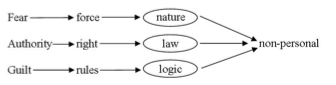
However, if the interpersonal is the generalized condition of parent-child association, then that context qualifies 2-4 into effective approaches, and rejection will not be sensed.
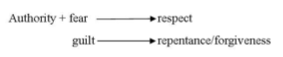
rather than
5. Rejection
a. Withdrawn love
b. Communicating distrust
B. Being consistent
1. From child to child: Jacob to Joseph, Isaac to Esau
2. From situation to situation
a. Firmness (lenient vs. severe)
b. Expectancy (rule changing)
c. Mood
3. From parent to parent
Not letting our children play one parent against the other.
4. From example to expectancy
5. In loving them
C. Reasons we do not discipline as we should
1. Fear
a. That we will break our children’s spirit (= misdirected love)
b. That we will drive them away
c. That we will make them dislike us
d. That we will create the adverse effect (rebellion)
2. Self-centeredness
a. We can be too interested in our own concerns.
b. We can be too interested in avoiding the work of correction.
CONCLUSION
Good people do not necessarily raise good kids.
Breakdown in value transfer occurs because . . .
1. We do not intentionally deal with our children to create self-esteem and security through teaching and correction.
2. We know we should love our children, but we do not know how.
3. We know what they ought to be like, but we do not know how to get them from where they are to where they should be: perfectionism, idealism.
a. We can create the adverse effect.
b. We give up.
4. We get too involved with our own interests and responsibilities.
christir.org