
Resolving Conflict
RESOLVING CONFLICT
Virgil Warren, PhD
INTRODUCTION
A. The author’s experience with divided churches
Success at resolving church conflict has not been the most consistent experience. What often happens is a resolution through a power struggle in which the congregation loses those with the minority opinion. There is an erosion of membership on one or both sides of the discussion. People are hard to change once they have made up their minds and have committed themselves openly to a viewpoint.
Conflict resolution calls for a maturity that is often not present; that is probably what caused the problem in the first place.
B. People and issues cause conflict.
Since this is so, resolving the conflict must involve working with both the people and the issues.
1. The tendency to confuse them.
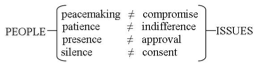
People tend to transform preferences into something doctrinal. The same thing happens with personality conflict.
It is okay to make peace.
2. With issues we need to distinguish . . .
a. Biblical teaching from personal preference (faith, fact, or opinion)
b. Relatively central from less central (faith vs. fact)
Sometimes issues are really taught in Scripture—directly or by “necessary inference.” It is still wise to take an opinion approach till everybody involved can work through the issue.
3. With persons
To a great extent, we must work with people before we can resolve issues.
a. Get people in a proper frame of mind so they can listen (John 8:37, 43).
b. Create readiness (John 16:12; cp. Matthew 19:8).
4. The priority of persons over issues
People have worth even when they are wrong (importance).
People first need the right frame of mind to talk about doctrinal matters
(time).
I. ESTABLISH CREDIBILITY.
Establishing credibility is something we have to do ahead of time.
It is something we must do before we try to lead. Credibility has much to do with establishing ourselves as leaders.
We model in ourselves the approach to be used by everyone . . .
A. By distancing ourselves from both sides in a controversy.

B. By being respectful toward everyone concerned.
C. By evenhandedness with people on both sides.
Ask people on both sides to help with particulars: leading services
passing communion
praying
non-church work
Reinforcing close friends could create a third group.
D. By spending time with people on both sides.
Avoidance seems easier, but that is what helped cause the division in the first
place.
Visit them in their homes.
Help people on both sides: “If your enemy is hungry, feed him.”
E. By not reacting when the matter comes up.
Reacting implies that things are out of control and that you do not feel in control
of yourself.
Avoid trying to answer quickly. Put some space in before you reply.
not keeping a relaxed face (the “dead serious” look).
using unrestrained expression (exaggeration, emotionally laden words).
F. By caring about people more than about issues.
Establishing credibility prepares the way for establishing ourselves as an object of identification by both sides—so we can mediate.
II. MEDIATE BETWEEN GROUPS.
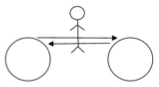
A. Filter communication between them.
Pass along good comments by one side about the other (the opposite of gossip).
B. Interpret the position and motives of one side to the other in a positive way.
People typically misunderstand each other’s ideas and motives. Usually both sides
of an issue have an element of truth. The issue becomes an issue because people
push that partial truth too far.
C. Point out strengths of the other people.
D. Coach the one side on how to relate to the other.
E. Bring people into each other’s presence.
Barnabas brought Paul to the other apostles (Acts 9:26-30).
The longer people are away from each other the worse they build up the other
persons in their mind.
III. ORIGINATE THINGS THAT CAN HELP.

A. Help fix attention on church work unrelated to the issue.
Note the problem The harder we work at correcting some issues the worse
of adverse effect: we make them because
(1) we draw more attention to them;
(2) we imply great importance.
In other words, get on with the rest of the work of the church. Controversial issues tend to focus all the attention on themselves.
B. Stress matters of agreement.
1. Helps keep things in perspective.
2. Do not deal with problems from the pulpit.
3. Deal with difficulties privately, where people do not have so much concern about saving face. Having fewer people to deal with allows us as “arbitrators” to set the tone of the interaction.
C. Establish inviolable time like worship time or Sunday school.
D. Suggest establishing special times to discuss issues.
Invite people from both sides.
Those that are not particularly interested do not have to listen to a “bunch of
harangue.”
IV. RELY ON RESOURCES BEYOND OURSELVES.
A. Time
defuse
Time tends to objectify issues.
desensitize
Time puts things into perspective.
As long as new problems are not added into the mix, the original issue tends to
lose energy.
Do what you can to keep the problem contained instead of letting it spread to
other issues by way of attitude.
People hurry and press for solution, which crystallizes people instead of
transforming them.
B. Unrelated weaknesses of a party’s leader sometimes dissolve the group he
has created.
Division makers often have weak personalities, which end up discrediting them to those who previously respected them and followed their leadership. As time goes on, they see the weaknesses that the perpetrator has.
C. Christian character within the people of the groups
Appealing to their common commitment to Christ helps resolution.
D. Providence activated by prayer
CONCLUSION
Some problems we can only solve attitudinally, not just in the sense of preparing mentalities for conceptual change, but for ongoing relationship without altered convictions.
christir.org