
Strengthening the Will
STRENGTHENING THE WILL
Virgil Warren, PhD
INTRODUCTION
A. Terminology: will, choice, motivation, volition, willingness, self-discipline,
“wanting to”
B. Freedom of the will does not mean (a) it is as easy to do one thing as another;
(b) there is no drag of past behavior on
present resolve.
C. Note Paul’s Christian experience in Romans 7:12ff.
D. We tend to suppose that emotions, will, and conscience do what they please. Our temptation is to feel helpless in the face of their inclinations.
I. SOURCES OF MOTIVATION
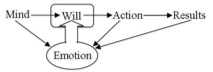
A. Mind brings . . .
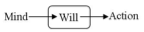
Mind supplies the set of values we live by.
Will connects mind/values with action.
1. Clarity
Good motivation requires the mind to give clear purpose.
2. Certainty TECHNIQUE #1:
study and think
The mind must have certainty that its course of action is correct (Hebrews
11:6; Acts 4:19-20).
3. Duty
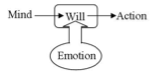
B. Emotion brings . . .
4. Desire
We find the time to do what we want to do.
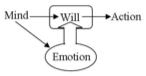
Emotions and feelings we should not think of as uncontrolled phenomena. We shape them with the mind and give them direction by the values we have adopted with our minds.
Honesty is not tied to feelings, but to mind.
Hypocrisy is not a matter of mind without feelings; it is a matter of saying one thing when we believe another, not doing one thing when we feel another.
5. Guilt
Conscience is the combination of mind/values and feelings.
Guilt is a powerful motivator before an action; it is a destructive experience
after an action.
C. Action brings . . .
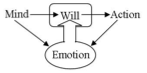
All we need is enough will to get started. TECHNIQUE #2:
Often the activity generates the get started
motivation to continue.
If we want to, start to. Getting started
at the time when the desire is there helps avoid procrastination. If a new task comes up, do something on it immediately. If it is a small enough job, take care of it at once; it helps us feel on top of things, which further enhances motivation.
We learn to want to by doing what we ought to.
6. Enjoyment
The enjoyment potential in the activity will help us keep at it. Doing good
contains its own motivating power to continue.
7. Association TECHNIQUE #3:
will indirectly
Will to get started perhaps with the
paraphernalia of an activity. Doing
the activity builds a sense of association with it; to be motivated about
something, it must be close to us.
If it is a matter of learning to like teaching Sunday school, for example, we can volunteer as a teacher’s helper just to get into the situation and develop a sense of connection with teaching Sunday school classes.
8. Variety
In order to help our motivational level, we may need to overcome the dried-out feeling by doing something fresh and new: hobby, “change of scenery,” vacation; work on more than one thing at a time for variety’s sake.
9. Physical condition
Lethargy often comes from inadequate diet, exercise, rest. Getting these needs taken care of pays dividends in more energy to do work. Our bodies will not be working so hard against our minds, will, emotions.
D. Results bring . . .
10. Success
Success begets success because it motivates.
The success can be in the experience of other people if not in ourselves.
11. Rewards
Good actions yield “peaceful” fruits (Hebrews 12:11).
We can even establish self-reward systems: If we complete a project,
we allow ourselves some enjoyable experience.
Evil acts usually leave negative results, which is good for us to remember
for motivational purposes.
12. Fear
Fear is helpful in those matters
that are not especially enjoyable. The alter- TECHNIQUE #4:
natives to acting rightly are not acceptable to Obligate yourself in situa-
us. tions that push you into
getting results.
The advice here is the opposite of temptation
advice, which is to avoid bad situations so
we do not get tempted. Here it is avoidance about the results we fear to
have in our life.
E. Other people can contribute:
13. Love
Love is the best motivator where we are motivated by another’s love and where we are motivated by our own love for another we can help.
14. Trust
15. Hope
What we use to communicate motivation:
16. Speech
Hebrews 13:22
Francis Bacon: “Rhetoric functions to harness reason to imagination for the
better moving of the will.”
17. Example
Philippians 1:14: Note the inspiration of other people’s commitment.
TECHNIQUE #5:
fellowship
The Mission of the Twelve and the Mission of the Seventy were two by two.
Hebrews 10:24: Through fellowship we encourage one another to love and
good works.
TECHNIQUE #6:
pray
Philippians 2:12-13: “Work out your salvation with fear and trembling, for it is God that’s working in you both to will and to work for his good pleasure” (hence, our prayer to help activate his special help to us).
2 Thessalonians 3:5: “May the Lord direct your hearts into the love of
God.”
II. IMPORTANT VARIABLES IN MOTIVATION
A. Intrinsic vs. extrinsic motivation
Intrinsic motivation arises out of matters germane to the activity: motivation to practice a musical instrument because the music you can produce is pleasant to hear.
Extrinsic motivation arises from factors not germane to the activity: stickers that a music teacher may put on our practice piece if we do it well.
B. Experiential vs. goal orientation
Experiential motivation refers to the enjoyment that comes from the variety and stimulation present in actually doing something. Goal motivation is the delayed gratification that increases through the added element of expecting we find in hope, reward, success.
C. Internal vs. external center of control
Christians need a healthy balance between external and internal centers: too much internal creates a sense of works; too much external control creates a sense of fatalism.
Interpersonal existence encourages personal initiative that recognizes the need for encouragement from other people.
D. Impersonal vs. interpersonal motivation
Motivation is most effective when it comes from other people and when we do it to other people.
CONCLUSION
We live by values instead of by drives.
We live by purpose instead of impulse.
We live toward people instead of things.
We live toward other people instead of ourselves.
The will establishes these patterns and is further developed by them.
Emotion is a prominent part of our contribution to our motivation. Love is the most prominent part of other people’s contribution to our motivation.
A. The initiation and perpetuation of properly using the will comes largely from external influence of other persons.
B. Accumulated past success helps our present resolve.
christir.org