
The Interpersonal Character of Christianity
THE INTERPERSONAL CHARACTER OF CHRISTIANITY
Virgil Warren, PhD
INTRODUCTION
Purpose of the three-part series: the in-life operation of Christianity: (1) vertical relationship to God, (2) horizontal relationship to other people, and (3) personal development in the context of those other two dimensions

I. CHARACTERISTICS OF PERSON
A. Image of God
Corporately: Genesis 1:26-27 Man and woman in the image of God
SOCIAL CHARACTER
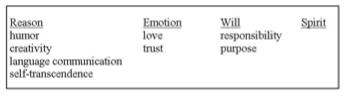
Genesis 1:20b-23
5:1b-3
1:24
B. (Personal) Interpersonal
Individual elements: social capacity (relational)
divine purpose (responsible)
II. EVIDENCE FOR THE PRIORITY OF THE INTERPERSONAL PRINCIPLE
(See “Bases for Interpersonalism: The Integrating Reality for Christian Truth.”)
Four kinds of things: person, nature, law, rationality
Personal process is carried forward by influence and response to influence.
Natural process moves forward by force (in-built natural laws).
Legal process is carried forward by authority.
Rational process (metaphysical process) is carried forward by form.
A. Big words in Christianity: grace vs. law
faith vs. works of law
mercy vs. justice
promise vs. eventuation
love
reconciliation
B. Genesis 1:1, 3a—nature
C. Galatians 3:16-19a—law
D. 1 Corinthians 2:1-5—reason
Summary: Person created nature.
Promise preceded law.
Christ transcends reason.
Every perversion of Christianity has been some kind of departure from interpersonal process as the fundamental reality in the Christian worldview.
III. RELATIONSHIP BETWEEN CAUSES
(See “Characteristics of Interpersonalism.”)
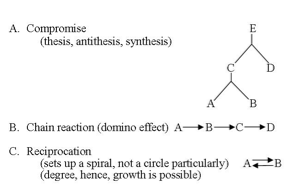
Nature, law, and reason tend to be either-or (categorical), but a person allows for continuum; hence, it is not as easy to give a time when as with law, which is very categorical.
IV. RELATIONSHIP OF RECIPROCITY TO BASIC CHRISTIANITY SERIES
DEVELOPMENTAL GROWTH: sanctification, faith, assurance, love, fellowship,
self-image, coping

V. OTHER FACTORS BESIDES (1) reciprocation (mutual change),
(2) degree/continuum (hence, gray areas):
(3) Intention/motive and attitude (internal factor) are important.
(4) Relationship across diversity
(5) Projecting consciousness over behind the other person’s eyes
(6) Change is by influence (vs. authority or force): example, reasons given, explanation, showing you care about the other person.
(7) flexibility/complexity. Interpersonal relationship is the most complex reality there is. That is so because “slippage” can happen on both sides of the relationship (in contrast to stimulus-response, e.g.)
Summary: Christianity operates in terms of the characteristics of persons.
Christianity addresses the principles that govern interpersonal relationships.
THAT IS BASIC CHRISTIANITY
christir.org